Showing posts with label Laundry. Show all posts

Tuesday, October 16, 2018

Benefits of Steam Clean Dryers & 3 Different Cycles

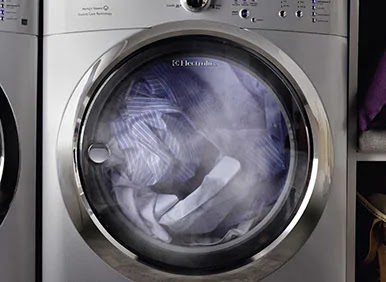
Steam dryers have some great benefits and should be considered when looking at new machines. Normal dryers use heat to dry clothes and allow the moisture to evaporate out of the clothes.  With the steam option, water is sprinkled into the dryer throughout the cycle in the form of steam. The steam can help reduce wrinkles and remove static  by softening the fabrics . Another great benefit is that steam clean can sanitize fabrics reducing orders and bacteria. There are a couple of different types of steam cleaning and steam can be used in different ways on your fabrics.

Where Does the Steam Come From?
The steam options on dryers either hook up easily to your existing plumbing. For most brands, all you need to do is buy a steam kit and install it. The steam kits usually include a tee connector, a short braided water line, and a longer braided water line.  The steam kit just hooks into the cold water faucet that your washer uses.  Some brands have a water reservoir that you refill before each load. 
3 Types of Steam Cycles
The different manufacturers will call their cycles something different, but these are roughly the different types of steam cycles. Some newer models might even have additional cycles and options.

1. Steam Dewrinkle: This cycle introduces moisture back into the dryer if clothes are wrinkled coming out of the dryer. This is really nice feature to use if you forgot to get the clothes out of the dryer after the cycle is done. You just turn your dryer back on and select this cycle and the steam will get rid of the wrinkles.

2. Steam Refresh: This cycle refreshes clothes. This cycle is used if you wear some clothing for short period of time and you don’t want do a full wash and dry cycle on it before your next use. Just stick it in the dryer and do a quick steam refresh and you are good to go.

3. Steam Sanitize: This cycle is designed to sanitize what can’t be washed. It can be used to sanitize items like pillows, toys, shoes, stuffed animals, and more.

Steam dryers adds more flexibility and options to your laundry needs. There's no need to worry about getting your fabrics freshened up before an important moment in your life with steam drying options.

Monday, October 8, 2018

How to Trick your Washer into Filling with more Water

Kieth is here today to show you an awesome hack with you washer. Some people talk to us about wanting to have more water in the drum when they do a load of laundry. If you have a top load washer, this is a great hack for you.

Before we dive into this hack, lets first talk about the amount of water that your washer uses. Some might think that the washer is not using enough water, but in reality, it probably is using just enough water especially with the new Energy Star High Efficient washers. There are only a few reasons why you would want to add more water to your load. If your cotton fabrics come out dirty or nearly dry straight out of the washer, or if you are washing a big comforter. These are indications that your machine needs more water.


Before you do a load follow these steps to have more water in your washer:
1. Load your washer with the clothes that you want to clean.
2. Pick any cycle and have the drum fill up with water.
3. Drain the water out and leave your clothes in the washer.
4. Turn off the machine and turn it back on.
5. Select the cycle that you would like to run and let the washer complete the cycle.

By following these steps, you have tripped the amount of weight of the clothes by making them wet. The agitator at the bottom scenes the weight and will fill up the washer with water depending on the weight of the clothes.

This hack only works for top load washers and cannot be done with a front load washer. Front load washers have a limit on how much water it can hold and if it goes more than a certain amount it could leak and cause other issues.

Always use the recommended amount of detergent every time.

Other tips that you can do before you add more water to your washer:

  • Have smaller piles of clothes in a cycle to allow more room for the clothes to move around and get clean.
  • Use a more aggressive cleaning cycle like heavy-soil or heavy duty cycles.
  • Try using the steam settings if you have them.
  • Pick a better laundry detergent, but use the recommended amount.
  • Pre-treat tougher stains before putting the clothes in the washer.


Tuesday, September 18, 2018

High Efficiency Front Load VS Regular Top Load Washer

Keith is here to show you the difference between the new technology of the high efficiency front load washers and the older technology top load washers.


New HE Front Load Washers

With the new front load washers, one of the first things that you will notice is that there is a HE symbol where the soap dispenser. The HE symbol stands for high-efficiency. This tells you that the machine does have the new technology and that you need a certain type of soap with the HE logo. You will use less soap and use soap that is less dense. 

Front load washers use less water, your clothes will come out more dry after a cycle, and will ultimately save you money. Each cycle with a top load washer will use between 3-5 gallons of water. There are usually 2-3 cycles per load making the total amount of water used to about 10-15 gallons. People tend to use the extra rinse cycle as a way to really wash out all the soap in the load. This is good for people who tend to use too much soap. 

One question that we hear a lot is, will this amount of soap really clean my clothes? The answer is YES! Using less water means that it requires less soap and that you should stick to the manufacturer's maximum amount of soap.

 One other great benefit of using the high-efficiency washer is that it uses less electricity. The drum does spin faster, but with the newer technology, the appliance unit will use less electricity.

Old Top Load Washers

These washers have been around for 40- 50 years with really no new technology. These are the same washers that you grandma has used for years.

The big tub can hold from 10 to 30 gallons of water in each cycle filling it to the top. Each load takes about 2-3 cycles similar to the new technology. But when adding up all of those cycles, you are using about 60-90 gallons of water per load. That is a huge difference! With more water requires more soap to evenly distribute it out. This is why you use more soap.

Because of how much water you are using, requires more soap, more electricity, and costs you more money with this option in the long run. The convenient thing about the old top load washers is that the cost to buy them is going to be more affordable.

The Comparison
After comparing the new top load washers with the old front load washers, you can see a big difference between the two.. These differences are more clear when thinking about how much laundry you do, especially with a family. If you are looking at having to use less soap, less water, less electricity and want to save money in the long run, it is worth the upgrade to the new high-efficiency front load washes. 

What are your thoughts? Leave them in the comments section or contact our store.

Tuesday, June 19, 2018

Laundry Pedestal Options and More Innovative Technologies


Today, I would like to introduce the latest accessory innovations with the LG Side-Kick Laundry Pedestals and Samsung Flex Wash. But before we go into details, let's first start with the basics and explain what a pedestal is in the first place.


Traditional Pedestals
With front load washers, it can sometimes be daunting for people to bend down to place and remove laundry. Pedestals were made to make things a little bit easier.  A pedestal goes underneath the washer and dryers. It raises the appliances off of the floor of about 12-16 inches. This makes it easier to place and remove clothing inside the washer and dryer.  This will put less strain on your back by not having to bend down as much without a pedestal.

The other convenient thing about pedestals is that  it is a great storage area to make your laundry room not seem cluttered with it being in a drawer and almost blended into the look of your washer and dryer. You can keep your detergent, fabric softener, bleach, dryer sheets, and other supplies in here. 

Just remember that not all pedestals are the same and that you will need to make sure that you get ones that is the right size, shape, and color as your appliances.

You can find traditional pedestals in every brand of appliance. Find one for your laundry set here. or you can call one of our stores to make sure that you get the exact one that works with your washer and dryer. 


LG Side-Kick Pedestals
   This innovative washer mounts neatly beneath your LG front-load washer is a great alternative to the traditional pedestals. This pedestal option enables you to wash two separate loads of laundry at the same time.  This unique washer is specifically meant to handle your smaller, more delicate items in a smaller load.  You can now do a giant load of towels, and a smaller load of hand-wash items at the same time.

    This new idea can be a real time, water, and energy saver for you and your family when it comes to laundry day or when you need to do an emergency small load.

Take a look at theis LG SideKick Pedestal: WD200CW


Samsung Flex Wash
Samsung makes Flex Wash which is similar but is actually a 2-in-1 machine instead of a separate machine in a pedestal form. The Flex Wash has the small washer on the top of a front-load washer at a 1.0 Cu. Ft Capacity and can do faster cycles than a traditional washer and has the option of steam wash and dryer options.

Check out this Samsung model: WV60M9900AV.

See these options yourself at Appliance Factory & Mattress Kingdom. We can help you find the perfect pedestal option for you. We can take it  one step further by showing you the LG Side-Kick and Samsung Flex Wash options to optimize your washing and drying experience. Ask our team questions that you may have bout laundry and we can show you the best laundry innovations that are available and find one that fits your needs.

Give your laundry day a kick, with the new LG Sid- Kick laundry pedestal or become a little more flexible with Samsung Flex Wash. The choice is yours, but we can help you through the decision.

Tuesday, June 5, 2018

Why Buy a Top-load HE Washing Machine


Let’s start with the question what does HE mean? HE stands for high-efficiency in washers. In order for a washing machine to be considered high-efficient, it must follow meet certain criteria and guidelines in regards to how much water, electricity, and detergent it uses. Look for the HE symbol on the machine indicating that it uses less energy, water, and detergent.
HE washers can be found on front-load and top-load washers. Both HE washer styles are efficient with the clothes cleaning performance. Here is a look at why you should consider a top-load HE washing machine rather than a traditional top-load or front-load washing machines.
Better Cleaning, Less Water
Most HE top-loaders are better at cleaning, gentler on fabrics, quieter, and use less water than traditional agitator washing machines.
Lower Cost
Front-loaders, which is a newer technology and more popular, are usually your most expensive option. HE top loading machines give you the benefit of significant water savings as opposed to a standard efficiency top loader, at a fraction of the cost of front load HE units.
Larger Capacity
HE top-loaders do not have agitators which increases the capacity of the unit. You can do less loads of laundry by having more clothes in one load. An agitator top-load washer varies in sizes from 3.2 Cu. Ft. to 4.5 Cu. Ft capacity. A HE top-load washer ranges in sizes from 4.5 Cu. Ft. to about 6.2 Cu. Ft. capacity. Their extended wash cycles allow the machine to provide clean clothing with minimal water use.
No Vibration Problem
Top load HE units spin faster than standard efficiency top loaders leaving your clothes dryer with less time. Their final spin speed is significantly slower than a front-load unit, which decreases the possibility of vibration.
No Mold Issue
Unlike a front-load unit, the door does not have an air tight seal. By leaving the top open, and using an approved washer cleaner once a month, you can virtually eliminate the possibility of mold or mildew better than a front-load washer
ENERGY STAR Qualified
Because HE washers and dryers meet strict energy and water guidelines the machines are considered to be ENERGY STAR Certified. This can save you more money and energy throughout the life of your appliance.
HE washers and dryers are more common now, which makes them a little more affordable compared to when they first came out. They are still more expensive up-front than traditional agitator washers. With the many benefits of HE washers, it will save you energy, water, and time in the long run making it worth the upgrade.

Tuesday, February 27, 2018

What to Know About Buying Stack-able Washer & Dryer

There are so many different types of washers and dryers. One of the best features about front load washers is that you can stack the dryer on top. This is very convenient when you have little space for your laundry pair as it takes less floor room.


In this video, Richard goes into detail about the different types of washers and dryers that are stackable. Watch out for the depth of the units and how they stack on top of each other. Some washers and dryers actually slope backward at the top. This makes the weight of the unit move to the back. This option does require more depth in the back. Make sure that you have enough room for this features. If you do not have enough room in the back, make sure to get a laundry pair that has a flat front.

Friday, January 12, 2018

Wash Two loads at once with this Washer!

Joe is here to show you the amazing features of a new innovative washing machine. With this Dual Flex Washer from Samsung, you can do two loads at once. Using this washer will save you time, energy, and give you the flexibility.


Here are a few great features of this washer:

  • Flexwash- Wash two different loads at the same time.
  • Faster Cycles- You can do a load in 30 minutes.
  • Steam Wash- This features allows you to remove stains easier.
  • Quiet Wash- With the VRT Plus technology, it reduces the vibration of the drum.
  • Total Capacity- More space means that you can wash more at one time and do less loads over time.
  • Connected- You can start your wash from your phone, monitor the cycle, and have a timer go off when it's complete.
  • Energy Star Raited- This is an eco-friendly and energy-efficient machine.


Love the look of this washer? Click here to see more or stop by one of our stores to see it for yourself in person.


Friday, August 18, 2017

High Efficiency Top-load Washers vs Front-load Washers


Chuck Ewing, the CEO of Appliance Factory & Mattress Kingdom, is here to help you understand the efficiency in top-load washers and front-load washers. You will also find out which one is more efficient than the other. Watch the video to get information.

Top-load Washers
To get the highest efficiency, you need to use less detergent, less water, and less hot water. The washer will spin the cloths fast making clothes go up. This is not the most efficient way to wash your laundry.

Front-load Washers
Because the drum sits on the side, there is less water need to wash clothes. Clothes spin more evenly making sure everything gets wet. Because there is less need for water, you use concentrated detergent as your soap.


We hope that this video helps you make the best decision for buying your new washer and dryer appliances.

Let us know if you have any questions about efficiency in appliances. Leave them in the comments section.

Wednesday, August 2, 2017

Kiss Ironing Goodbye with These 5 Great Laundry Tips

Hate to iron clothes? You’re not alone! Pressing blouses, shirts and slacks can be a very tedious, time-consuming process, but you don’t want to be a wrinkled mess at work and it can cost a fortune to have the dry cleaners handle it! What to do? Luckily, we have some tips that can take the wrinkles out of clothes without the assistance of an iron, so you can look great without having to spend a lot of time dealing with them. Now you can enjoy wrinkle-free clothes without the hassle of ironing- everybody wins!


Set a Timer
It can be tempting to load clothes into the dryer, walk away, and forget about it until it’s time to fold. But this method can make clothing even more wrinkled, especially if you’re doing a large load. Set a timer for 20 minutes. When it goes off, pull out all the items you normally would need to iron, and lay them flat to continue drying, or hang them on a drying rack in your laundry room. They’ll be naturally wrinkle-free when you’re done! If you have a connected appliance, you can sink your dryer time to your phone and either stop it at any time or have the alarm go off when your clothes are ready. 


Use Dryer Sheets
Besides the added bonus of making your laundry smell fantastic, dryer sheets can make clothes come out of the dryer less wrinkled by softening the fabric. Nothing could be easier than throwing a dryer sheet into the laundry, and it is a good first step to an ironing-free lifestyle. Try Downy April Fresh dryer sheets for a nice, light scent that is not overpowering.


Release the Wrinkles!
After your clothing has dried, spray it with a wrinkle releaser and hang it in the closet. A wrinkle releaser does just what it says on the label- releases wrinkles by making the fabric hang straight. We like Downy Wrinkle Release in April Fresh, so the scent can match your dryer sheets!


Know When to Fold ‘Em
Leaving your laundry in the basket unfolded after it’s been taken out of the dryer is a great way to get many wrinkles on all your clothes. By folding the laundry the second it comes out of the dryer, you can smooth any wrinkles that would have needed to be ironed out. Bonus: you get to touch nice, warm clothes fresh out of the dryer!


Hang Up
No matter how careful you are with your clothing when you take it out of the dryer, it can all be for nothing if you don’t hang things up as soon as your laundry is done. Let gravity work for you by hanging your items on a hanger to naturally release the wrinkles. This will make your garment look great for a very small amount of work!


Got any more ironing tips (namely, ones that allow you to opt out of ironing)? Let us know in the comments section.

Friday, February 10, 2017

To Steam or Not To Steam

In recent years steam technology in laundry has become the latest sensation. You may be wondering, what exactly does it do? The average consumer does not fully understand or even are aware what the benefits are. Some do not even know that it is an option. Here is an overview of what steam technology can do in washers and dryers:


Washers
  • Earth-friendly attributes boosts cleaning power with steam and it requires less water to do the job.
  • Steam washers utilize a combination of water and steam in a variety of cycles to for a better wash for your laundry.
  • Steam boosts the temperature inside the washer drum, causing fibers to relax and more efficiently absorb water, releasing deep-down dirt and stains.
  • Wrinkles are reduced by high-heat steam softening fabrics, which allows wrinkles, deeply embedded during spin cycles, to flatten out.
  • High temperatures will also sanitize clothing by reducing allergens, such as dust mites and pet dander.


Dryers
  • Steam dryers provide similar benefits to clothing steamers while the clothes remain in the machine
  • Steam setting also removes some resistant odors that wash cycles may not remove also helping to kill bacteria that cause them.
  • Based on that information a consumer can determine now whether or not steam has useful benefits for their situation and laundry needs.

Have we got you hooked onto why you should look into steam technology? Check out the LG
TurboWash Washer with Steam Technology now, but stop by and check out all the other washers and dryers that offer steam technology. 


Thursday, January 19, 2017

TOP LOAD VS. FRONT LOAD WASHER


So your washer has just run its last cycle in its long and prosperous life and now you are, for potentially the first time, shopping for a brand new one. You walk in to an appliance store and you see an overwhelming selection of washers to choose from. There are top load with the agitator, there are top load without the agitator in the middle, and finally there are front load washers. What is the major difference between the three? Well I’m here to answer exactly that.

Lets begin with top load washers with
agitators. This is your traditional washer set up and generally at lower price points. The first thing to mention is that very few top load washers are built in the old school manner where they will last 15 to 20 years. Most modern washers on the market going to last 8 to 10 years, regardless of set up. The reason they don’t last as long is because the savings on energy efficiency over the 8 to 10 years of its life is enough money to warrant purchasing a new set. The down side of this washer design is water efficiency while the benefit is you don’t have to bend down to put clothes in. A great example of a top load washer is the LG 5.7 Cu.Ft. Mega Capacity Top Load Turbowash Technology Washer.

The top load without the agitator in the middle is a curious study. The lack of the agitator in the middle to pull clothes through the water to clean them means that the manufacturers had to get creative with the way the tub rotates. The benefit of these is that your clothes can’t get tangled around the agitator or get frayed, plus the capacities tend to go higher on them as well. The downside on them is water efficiency.

Now we get to the front load washers. The number one complaint I’ve heard customers have is that they tend to develop a smell over time. The manufacturers have fixed that issue by using anti-microbial material on the interior of the washer. The other thing to keep in mind is that front loads require ventilation, so keeping the door cracked is necessary. Now front loads are the best at cleaning clothes and here is why, the tub will spin out much faster than the top loads plus the tub itself is stainless steel on the interior. Now while they are generally more pricey, the amount of water savings you will have on front load vs. top load will pay itself off in two to three years. Check out the LG 5.2 cu.ft. Mega Capacity with On-Door Control Panel & TurboWash.

So in general, front load washers will clean the best and are the more efficient. The downside is having to bend down to load and unload, but they do have pedestal or stacking options. 

Saturday, December 24, 2016

5 Washer Tips That Will Save You Money & Time

Watch the  video before using your new washing machine. These tips will help you prolong the life of your washer and dryer, and ultimately save you money and time.


Here is a recap:
1. Make sure to use correct type of detergent.
2. Check your pockets before washing.
3. Air out the machine by keeping the doors open.
4. Check your hoses to avoid leaks.
5. Listen to your machine for rattles.

Now that you know these steps before buying a washer, stop by one of our 16 locations to pick out the right washer and dryer for you and your family.

Friday, September 2, 2016

Thursday, August 4, 2016

Really, What Is the Best Time of The Year To Buy Appliances?

You’ve been seeing the commercials; the ads in the magazines, your fridge just decided to give up, or you moved into a new home and the appliances are avocado green from the seventies. There are so many reasons why you may have started your appliance shopping journey, and one of the most important questions you’re asking yourself is “How?” and/or “Am I getting the best deal possible?”.  Chances are you’ve seen an ad from Home Depot, Lowes, and even us, Appliance Factory & Mattress Kingdom and every week there seems to be some special deal or sale going on; and you’re stuck questioning when to buy. Or even worse you’re forced to buy right now, and waiting is not an option. If you take a few moments to review these tips you’ll be more prepared no matter the time you buy.

Expert Tip: If you don’t take anything from this article outside of this one tip you’re going to be in great shape. No matter where you purchase, make sure the retailer has a price match guarantee. But wait; not all price match guarantees are created equal. Make sure your retailer doesn’t just price match the day of the purchase but for at least 30 days after the purchase.

Recap: If the retailer will not price match 30 days after the purchase, even against their prices: DO NOT BUY!

Now that we’ve discussed one extremely important item to appliance shopping in general, let’s talk about the best times of the year to buy appliances. Okay, let’s play a little game; take a few moments and think what the world and maybe even you thinks is the best time of the year to buy appliances? …Let me guess you said “Black Friday”? While Black Friday generally has some great deals, fun door busters, and lines around the corner; the best appliance deals are rarely during Black Friday; or even in the 4th Quarter.

Okay, you’ve waited long enough; the best deals and the best time to buy appliances is over the 4th of July holiday. However, don’t just focus on that one day; chances are most retailers will start their 4th of July pricing weeks before. Yes, that means you don’t have to rush to shop for appliances on one of the most fun family days of the year. Let’s make these numbers real so you can understand the discounts a little better.

At Appliance Factory & Mattress Kingdom we are known for the value we offer in our prices; our customers love to tell us how much money they’ve saved just by walking through our doors. We like when our customers save money, it makes us happy; and we know it’ll make you happy.

  •   Everyday customers on average save 15% when shopping with us over the competition.
  •   During the 4th of July our customers have reported saving over 27% – 33% over the competition! WOW! (In comparison to Black Friday where our customers reported savings from 21% - 28% )

Now that that’s cleared up we can’t wait to see you in one of our 16 stores so we can learn more about your project and partner together to find the right appliances for your needs and wants. 

What is great about this year, is that Appliance Factory & Mattress Kingdom is extending some of their 4th of July sales for a few more months. What are you needing to buy?

Monday, May 16, 2016

Sheet Folding 101

You know how new sheets are perfectly folded when they come from the store? You look at that tidy little square and think, “Yeah, right, who actually folds sheets like this?” In fact, it is a lot easier to fold your fitted sheets perfectly than you think it is, and it can be a real space-saver when storing sheet sets in your linen closet. Let us take the mystery out of getting a perfectly-folded fitted sheet with this handy little how-to:

Step 1- Drape sheet over hands, and hold the fitted sheet with one hand in each of the top corners, with the elastic edge facing you.

Step 2- Fold sheet in half vertically and flip the left corner inside out to create a little pocket. Turn the sheet 180 degrees and make another little corner-pocket at the top. If your fitted sheet has gathered sides, tuck them inside one another.

Step 3- Fold sheet in half again, so that all four corners meet up at one point. Flip the right set of corners over the left set.

Step 4- Lay the sheet on the bed and face the gathered edges up. Fold the longer part of the curved edge in a few inches to make a straight edge. Then, fold the sheet in half lengthwise and then into thirds to create a perfectly-folded sheet.


Friday, March 18, 2016

Spring-Cleaning Shortcuts (Part 2)

We found so many terrific tips for cutting cleaning time in half that we had to separate it into two blog posts! Here are some more little life-hacks that go a long way when sprucing up for spring:

Creative Dusting- Forget the rag and think outside the box when it comes to dusting. Use a lint roller to dust your cloth lampshades and other fabric surfaces (they work great on microfiber sofas and dining-room chairs). Alternatively, you can put a sock on your hand and use it as a dusting mitt for those hard-to-reach places.

Microwave Cleaning- We’ve mentioned before that half a lemon in a bowl of water can work wonders for removing stubborn grease and grime inside your microwave, but if you’re in a pinch and don’t have a lemon on you, just the water will do nicely. The steam will help to loosen all the stuck-on food particles and make them easier to just wipe off.

Toilet Tips- If your toilet is especially stained or grimy, make sure to let some cleanser soak in the bowl for a while before scrubbing the inside. This will help the dirt to loosen, making cleaning much easier and cutting down on elbow grease!

Oven cleaning- Most ovens have self-cleaning features these days, but these can be quite inconvenient, rendering your oven useless for hours on end and making your house unbearably hot, not to mention that smell! Simply spray an oven cleaner like Easy-Off on the inside of your oven on a night when you don’t plan on cooking dinner, then wipe it out in a couple of hours, or in the morning, if you have tough grease stains.


Unload Your Laundry- Nobody wants to face a huge pile of laundry! Cut the amount of time spent in the laundry room down considerably- and preserve your sanity- by aiming to do one medium load per day. At first you’ll think, “Ugh, laundry every day?” But you will soon be amazed how quickly you can sort, wash, dry, fold and put away a small load each day, as opposed to many large loads every couple of weeks.

Wednesday, December 9, 2015

Front- Loaders vs. Top-Loaders: the Debate Continues

Like Coke vs. Pepsi, boxers vs. briefs, or even the always-controversial “over vs. under” toilet roll debate, the question of whether a top-loading washer is really superior to a front-loader, or vice versa, is a topic with strong opinions from passionate debaters on either side of the issue. While both types of washing machines have their advantages and drawbacks, people seem to have a clear preference for one or the other, and are not likely to waver when it comes to buying a new machine. Here is an outlined pro/con list of both styles of washer; see where you fall in the Great Washer Debate:
 
Front-Loading Washers:
Pro: Front-loader enthusiasts often tout the eco-friendliness of high-efficiency models, citing the comparatively low amounts of water and energy that it takes to do a load of laundry.  Front-loading washers generally do use less water and spin faster than their top-loading counterparts, making them the greener option.
Con: They stink. Or, at least, they used to stink. Maybe they still do on occasion- the point is, a lot of people will never know because they won’t give the new designs a second chance. Many consumers were turned off by the first generation of front-loaders due to the chronic mildew smell that they reported coming from both the machine itself and the clothes they washed. So serious was this issue that the manufacturers took the complaint all the way to the Supreme Court, and the number of front-loaders sold in the U.S. dropped from 45% in late 2009 to just 29.5% today. The design of front-loaders has improved since the first generation to minimize the risk of stinky laundry, but many people are still wary of the front-loader design as a result.
Pro: According to Consumer Affairs, front-loaders clean better than top-loaders on average, while also using approximately 5 gallons less water per cycle. Also, with the use of an electric hot water heater, front-loading washers can cut electricity use by up to 50%, resulting in cost savings.
Con: Front-loaders are initially more expensive, which means that even though you will ultimately be saving money on your energy and water bills, the savings may not add up to enough to justify the price of the purchase.
 
Top- Loading Washers:
Pro: You can open the lid and throw in more clothes after the cycle has begun. This is a big deal for anyone who is easily annoyed by finding that missing sock in the hamper moments after starting a load.
Con: While top-loaders have gotten much better at cleaning, they are still about 5% less effective at their job, according to a test performed by Reviewed.com.
Pro: Top-loaders are initially less expensive than front-loaders, meaning that a family whose washer has just recently conked out can replace it with a new top-loader with a lot less impact to their wallet.
Con: Top-loaders just don’t look as cool as front-loaders. If the aesthetics of an appliance concern you, then a top-loader just isn’t going to make you happy. Sure, they’ve come a long way with their agitator-free barrels and clear lids, but if you want a washing machine that looks like it was designed for the Jetsons’ house and boasts a variety of colors and modern, high-tech features, the top-loader may not cut it.
 
Where does your loyalty lie? Join the Washer Wars in the comments below.

Save Time and Money with These Laundry Tips

We combed the Internet for the best tips, tricks and “life hacks” for doing laundry. These helpful hints will save you money, time and make your laundry look better than ever!
 

Unbutton All the Buttons!

Make sure you unbutton all of the buttons on a button-down shirt, to keep the buttonholes from stretching and tearing due to the agitation in the washing machine. Even the tiny buttons that hold down a collar should be unfastened prior to being tossed into the washer. (Source: www.realsimple.com)
 

Two is Better Than One

Something as simple as putting two laundry baskets in your closet- one for whites and one for colors- can eliminate sorting from your laundry routine altogether! When you get undressed at night, just sort the clothes into each basket as you take them off. When laundry day rolls around, you’ll be glad you did. (Source: www.lifehacker.com)
 

Refresh Towels and Eliminate Odors

You know that “old towel smell” that towels and washcloths get over the course of time? Give your linens a second life and eliminate that mildew odor for good by washing a load of towels twice in hot water; first with vinegar, and the second with baking soda. (Source: www.buzzfeed.com)
 

DIY Fabric Softener

Why buy fabric softener when you can make your own?- Next time you’re at the grocery store, skip the fabric softener and stock up instead white vinegar, that household staple that doubles as a super-efficient cleaning product. For a DIY fabric softener, add between ¼ cup and 1 cup vinegar to the final rinse cycle, but take care never to mix the vinegar with bleach. (Source: www.marthastewart.com)
 

Choose a Shorter Wash Cycle

There is no need to over-wash clothes. Choosing the shortest wash cycle and cranking up the water temperature is as effective at cleaning as a longer cycle with cooler water, and it will cut the time spent doing laundry dramatically. Similarly, run another spin cycle in the washer, which squeezes out excess water, thus reducing drying time. (Source: www.goodhousekeeping.com)

Installing Your Gas Dryer

There are two types of laundry sets – electric & gas. When you decide it’s time to upgrade, it’s important to know which set, electric or gas, you need to be looking for. If your home uses gas to power your laundry, there a few actions you need to take during the install process if you are doing it on your own.
It is important as a home owner that you understand how these gas-powered dryers work within your household. Most importantly, while you are replacing your old dryer, you need to check for gas leaks. Gas is naturally odorless but gas companies have added a rotten egg sort of smell to it so it is more detectable. If small amounts of gas are leaking in a large living space, chances are you will not know – this is why it is important to check your gas line and when you check it before install, it becomes a lot more convenient.
We have attached a link below of a full step-by-step process that we found helpful. These directions should make it easy to do at home on your own.
Install A Gas Dryer

Keeping Up With Your Front Load Washer

Several family homes have upgraded to the front load washing machine. They stack, they’re energy efficient, they save you time and money – mostly money! But what about the upkeep to make these beautiful machines last longer? You’re probably saying, “Wait, upkeep?? People do that?” YES! Maintenance is very important to help keep your machine running smoothly and almost more importantly, keep your machine and clothes from exuding a nasty, moldy stench.
Today, most energy efficient washers have a self-cleaning setting – much like your oven. This cycle helps to take care of and even prevent mold and mildew build up from all those loads of laundry. But there are other cost efficient, easy ways to keep your machine clean and if you’ve passed that point and it’s already starting to stink, there are solutions for that as well.
Below are some links that we have found to help the average laundry-set-owner keep their washing machine clean and fresh. Whether it’s a daily ritual when you’re doing the laundry or a here-and-there cleaning, these tips will help you prevent and take care of this unfortunate situation.
 

Tips and tricks to do for every load:

Daily + Once-in-a-while cleaning techniques:
Deep cleaning your cleaning machine:
Bleach and vinegar – but not all at once!